You are swapping tokens before a busy market open. The dApp shows an expected price, your wallet asks you to approve a transaction, and the network fee looks tolerable. But by the time the transaction executes, the pool may have shifted, the approval may grant broader access than you intended, or the trade may land at a worse price than the interface suggested. Each screen is showing only part of the risk.
That gap helps explain why modern Web3 wallets are becoming more than key managers. They sit between dApps and the blockchain, interpreting requests and, in some cases, simulating likely outcomes before a user signs. These tools can improve judgment, but they cannot make a changing, adversarial market predictable. To use them well, it helps to understand what integration, simulation, and MEV protection actually do—and where each stops.
A familiar swap, with several different risks
Imagine a US-based DeFi user connecting a wallet to a decentralized exchange to trade one token for another. The dApp prepares a transaction and asks the wallet to sign it. That request may contain a contract call, token approvals, a minimum acceptable output, and a deadline. The user sees a concise summary, but the actual transaction is an instruction to smart contracts—not a guaranteed order at a fixed price.
Three risks are easy to conflate here. First is permission risk: an approval can authorize a contract to spend tokens, sometimes beyond the amount needed for one trade. Second is execution risk: pool prices and available liquidity can change before the transaction is included. Third is ordering risk: other market participants may observe pending transactions and influence the order in which transactions execute. Different wallet features address different parts of this chain.
dApp integration is the connection that lets a decentralized application request wallet actions. Transaction simulation estimates what a proposed action would do under a particular set of conditions. MEV protection aims to reduce harmful effects from transaction ordering and visibility. These functions complement one another, but none is a substitute for checking the transaction itself.
From key storage to an interpretation layer
Early wallet use often felt like a narrow handoff: a website requested a signature, and the wallet returned one. As DeFi applications grew more complex, that model became harder for people to inspect. A user might be asked to approve a token, interact with a router contract, or sign a message that is not itself an on-chain transaction. The wallet increasingly needs to help translate technical instructions into a decision a person can evaluate.
This makes integration more than a convenience feature. A wallet connected to a dApp can receive transaction data and present an interpretation before signing. The quality of that interpretation depends on what the wallet can decode, which contract is involved, and whether the request can be simulated reliably. A readable preview is useful, but it remains a rendering of the request—not a promise that the application, contract, or future execution will behave as expected.
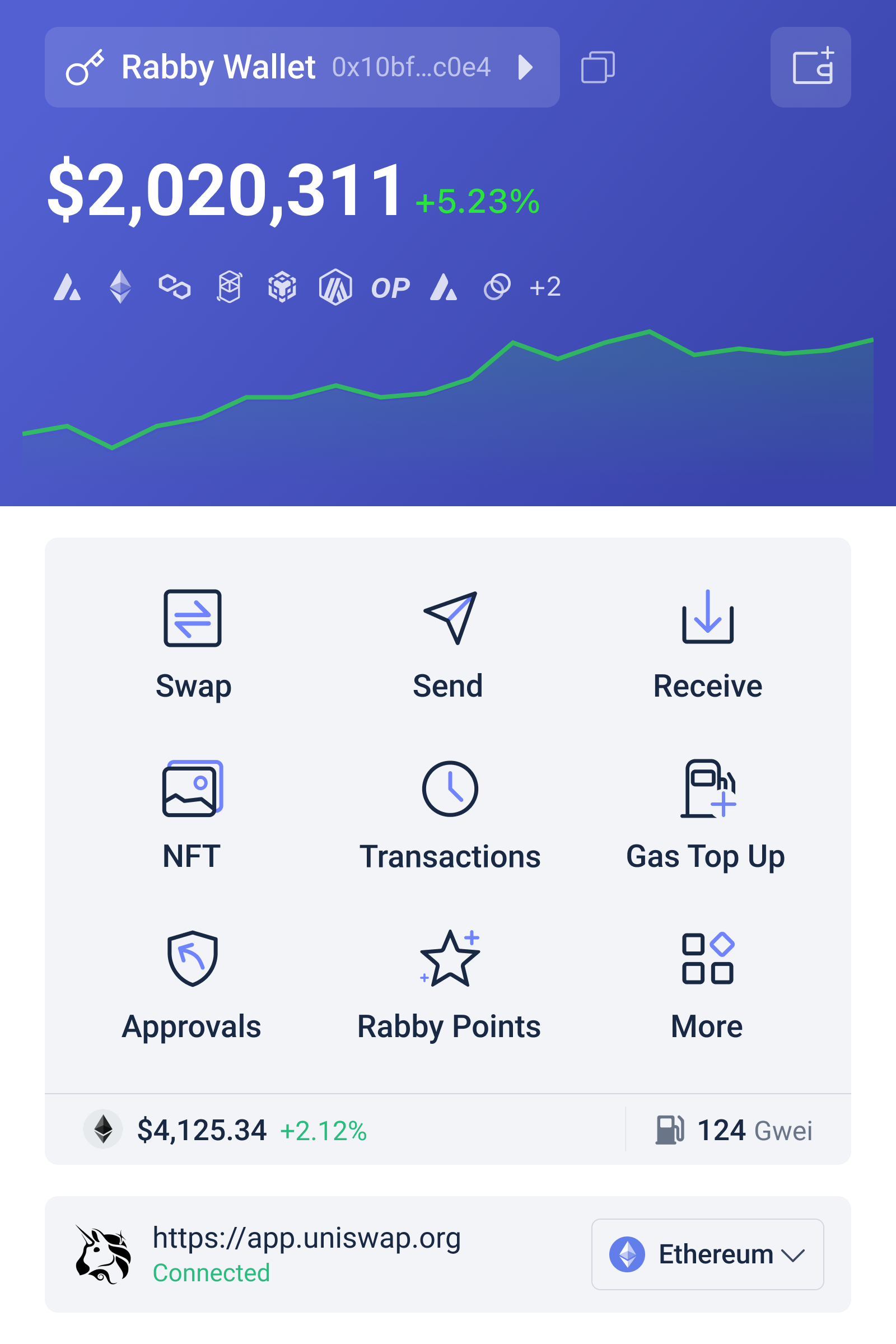
Rabby Wallet’s project messaging describes support across Ethereum and EVM chains, the networks that share Ethereum-compatible transaction conventions. For a user moving among those networks, broad compatibility can reduce the friction of managing separate wallet workflows. Anyone comparing wallet options can explore rabby wallet as one example, while still evaluating features against the specific dApps and chains they use.
What a simulation can tell you—and what it cannot
A transaction simulation runs the proposed transaction against an available view of blockchain state and estimates its effects. Depending on the wallet and transaction, that may help reveal a likely token balance change, a failed call, or an unexpected interaction. Conceptually, it is like testing a set of instructions in a snapshot before submitting them to the live system.
The snapshot is the crucial limitation. Between simulation and inclusion, another transaction can change a pool’s reserves, a lending market’s conditions, or a contract’s relevant state. A simulation may therefore accurately describe what the transaction would do against the state it examined while failing to predict what it will do later. Network congestion, the transaction’s ordering, and application-specific logic can all affect the result.
Simulation is best understood as a diagnostic, not a guarantee. A warning that a transaction may fail or produce an unexpected result is valuable; a clean preview does not certify a contract as safe or establish that the quoted price will hold. Nor can a simulation alone tell you whether a dApp is trustworthy, whether a token has sound economics, or whether a large approval is appropriate. It can sharpen the question—“What does this call appear to do?”—without answering every question a user should ask.
MEV: the market can react to your transaction
Maximum extractable value, or MEV, refers broadly to value captured by influencing the ordering, inclusion, or exclusion of transactions in a block. In a public transaction flow, a pending swap can reveal information about a user’s intended trade. Other participants may respond before it is confirmed, potentially changing the price the user receives. The outcome depends on the trade, liquidity, network conditions, and the route by which the transaction reaches block production.
MEV protection is not one universal switch with one guaranteed result. Wallets and transaction services may use different approaches to reduce exposure, such as routing transactions through less publicly visible paths or applying safeguards to execution. The trade-off is that protection can depend on the supported network, the transaction route, and the service’s design. It may also affect speed, availability, or the exact execution conditions. Users should look for clear explanations of what protection covers rather than assuming every transaction is hidden or immune to adverse ordering.
One useful distinction: slippage tolerance and MEV protection are related, but they are not the same. Slippage tolerance sets how far the executed result may move from the expected result before a swap reverts. A narrow tolerance can limit an unfavorable price change but may cause more transactions to fail; a wide tolerance can improve the chance of execution while permitting a worse outcome. MEV protections address aspects of transaction exposure or ordering. Neither setting eliminates the need to consider liquidity and trade size.
A practical decision framework
Before signing, work through three questions. First, permission: is this a token approval or a transaction, which contract is being authorized, and is the requested access proportionate to the action? Second, effect: does the wallet’s simulation or decoded summary match what you intended—especially the assets leaving and the assets expected back? Third, execution: what could change before confirmation, and are the slippage settings and any available MEV safeguards appropriate for this trade?
This sequence is more useful than treating a green status or security alert as a verdict. If the simulation conflicts with the dApp’s description, pause. If an approval is broader than necessary, consider whether the application offers a smaller allowance. If a trade is unusually large relative to available liquidity, remember that a quoted price is not necessarily the price at which the whole trade can execute. On US-facing applications, users should also distinguish technical transaction safety from legal, tax, and platform questions; a wallet preview does not resolve those separate issues.
There is a real usability trade-off. More warnings and detailed transaction data can help experienced users catch mistakes, but too many alerts can encourage people to click through without reading. Clear, specific explanations matter more than a high volume of generic warnings. The most useful wallet interface is not one that asks users to trust it blindly; it is one that makes the transaction’s likely effects and remaining uncertainty easier to see.
What to watch as wallet integration develops
Recent Rabby messaging emphasizes Ethereum and EVM-chain use, but the broader question for users is how consistently a wallet can interpret requests across different applications and networks. EVM compatibility does not mean every contract interaction is equally easy to decode or simulate. Complex calls, unusual protocols, and changing chain conditions can limit what a preview reveals.
If wallet tools continue to improve, the practical gain may be less about predicting every outcome and more about reducing avoidable surprises at the signing step. Watch whether simulations explain assumptions, whether warnings distinguish a likely failure from a confirmed danger, and whether MEV-related features make their coverage and trade-offs clear. Those details help users compare protections on substance rather than on labels.
The central lesson from the swap scenario is simple but not simplistic: the wallet is becoming an interpretation layer between a person and programmable markets. Integration brings the request into view; simulation offers a conditional preview; MEV protection may reduce some ordering risks. Each can improve a decision, but the blockchain’s state can change, and no interface can remove all uncertainty. A careful user treats the preview as evidence to inspect—not a promise to outsource judgment.
FAQ
Does transaction simulation guarantee that a swap will succeed?
No. It estimates the transaction’s effects against a particular view of blockchain state. Price, liquidity, ordering, or other state can change before execution, so the eventual result may differ or the transaction may fail.
Does MEV protection prevent every unfavorable trade?
No. Protection methods can reduce certain forms of exposure or ordering risk, but coverage depends on the wallet’s approach, network, route, and transaction. It does not guarantee a favorable price or eliminate market and contract risks.
What should I check before approving a token?
Confirm which contract is receiving permission, what token and amount are involved, and whether the requested allowance is proportionate to the action. A transaction preview can help, but the user should still verify that the request matches the dApp action they intended.