Imagine you tap “confirm” on a token swap in a popular DEX while commuting in Manhattan. The interface shows an estimated price and gas. You sign. Ten seconds later you see a different execution price, or worse, a failed transaction with an unexpected fee. That lived moment — where intention, network microstructure, and smart-contract behavior diverge — is where advanced wallet features repay themselves. This article uses that concrete scenario to explain how smart contract interaction really works, why miner/validator extractable value (MEV) is not just an abstract threat, and how portfolio tracking plus pre-execution simulation changes your risk calculus when you use DeFi from a U.S. context.
The goal here is practical: give you a mental model for what your wallet should tell you before you sign, which classes of protections are possible, and where they fail. I’ll correct three common misconceptions and then offer a reusable decision framework for picking wallet features when you trade, provide liquidity, or interact with new contracts.
Misconceptions and the mechanics underneath
Misconception 1: “The blockchain always executes my transaction exactly as I signed.” Not true. Your signed transaction contains an ordered instruction set, gas limit, and a gas price or fee cap. But what happens between you signing and the transaction being included in a block is decided by ordering and reordering incentives: validators, miners, or sequencers (in rollups) decide which transactions are ordered together. Bots watching the mempool can submit rival transactions that change the outcome for you. Mechanistically, that’s front-running (inserting a profitable tx before yours), back-running (inserting after), or sandwiching (both). These are forms of MEV — value extracted by reordering, inserting, or censoring transactions.
Misconception 2: “A wallet can prevent MEV.” A wallet can reduce your exposure but not eliminate MEV entirely. Options include sending transactions via private relays, using gas-price obfuscation, or submitting to builders/aggregators that block harmful reorderings. Each reduces the window of visibility to MEMPOOL watchers, but they depend on counterparty integrity and the network’s architecture (PoW vs PoS; rollups with sequencers). The mechanism is risk-shifting: instead of exposing your raw tx to everyone, you trust a smaller party to submit it fairly — a trade-off between exposure and counterparty trust.
Misconception 3: “Simulation equals certainty.” Transaction simulation — running the contract calls against a node or local state to predict outcome — is powerful but limited. Simulation assumes the state stays the same between the simulated block and actual inclusion. It cannot predict post-signature reordering, state changes by other actors, or on-chain randomness sources affected by timing. Simulation raises confidence by surfacing likely revert reasons, permit misuse, or slippage, but it does not guarantee the result.
How wallets can protect: mapped mechanisms and trade-offs
There are three practical protection layers a wallet can offer; each is mechanistic and has explicit trade-offs:
1) Pre-execution simulation and sanity checks. Mechanism: replay the exact call graph of the smart contract against current chain state and present estimated outputs, approval scopes, and gas usage to the user. Benefit: exposes hidden token approvals, unintended token transfers, and likely revert conditions. Trade-off: still depends on static state and honest node responses; adds latency and cognitive load. A good wallet presents the simulation succinctly and asks focused questions, not raw traces.
2) Private submission channels and MEV-aware routing. Mechanism: route signed or unsigned transactions through relays or builders that promise not to leak to public mempool or that includeMEV-protection strategies. Benefit: reduces exposure to public bots and sandwich attacks. Trade-off: shifts trust to relays/builders; not foolproof if collusion or honest-but-curious behavior occurs; depends on whether builders actually honor those commitments. For U.S. users, legal and regulatory pressure on large relayers could change their incentives over time.
3) Transaction wrapping and gas-management heuristics. Mechanism: include slippage guards, deadline timestamps, and conditional calls that reduce the profitable window for an attacker. Benefit: inexpensive and immediate mitigation for many trade attacks. Trade-off: stricter guards can increase the chance of tx failing if market moves legitimately, and complex wrappers can increase gas or gas unpredictability.
Portfolio tracking as a second-order defense
Portfolio trackers are not only convenience tools; they shift the balance of information. Mechanically, a tracker aggregates token balances, pending transactions, approvals, and historical gas usage across chains and contracts. That visibility helps spot anomalous approvals (infinite allowances), unexpected token inflows, or the economic consequence of repeated sandwich attacks on your trades. Where simulation gives you a forward-looking check, tracking gives backward-looking detection.
Trade-off: trackers may require on-chain indexing and off-chain storage, which raises privacy considerations and counterparty trust. You need granular controls: read-only wallet connection (no private key or signing), selective chain indexing, and clear local data policies. For U.S. users who worry about surveillance or taxation, choose trackers that let you export concise transaction histories without leaking private keys.
Comparing three wallet strategies for an advanced DeFi user
Here are three realistic wallet strategies and when each makes sense.
A) Minimalist signer + public mempool submission. Low trust, high exposure. Use if you value decentralization above convenience and accept higher MEV risk for savings. Provide trading discipline: tighter slippage, smaller order sizes, and conservative gas to avoid front-running market-moving transactions.
B) Simulator-first wallet with local simulations and approvals prompt. Moderate trust, reduced accidental risk. Use if you want to catch logic errors and rogue approvals before signing. This is the sweet spot for most DeFi users who interact with new contracts frequently: the simulation filters obvious traps while letting you remain self-custodial.
C) MEV-aware, private-submission wallet with portfolio integration. Higher trust in service providers, lower exposure to active MEV. Use if you execute large trades, provide concentrated liquidity, or operate strategies where front-running materially changes outcomes. Accept that you are outsourcing some ordering decisions; vet providers for track record and transparency.
One usable decision heuristic
Assess three axes for each action: economic sensitivity (how much does MEV or slippage cost you?), novelty risk (are you interacting with a new contract?), and detectability (can you monitor and revert an error afterward?). If economic sensitivity is high and novelty is low, private submission plus gas heuristics is justified. If novelty is high, always run simulation regardless of trade size; prioritize clarity on approvals. If detectability is low (irreversible actions), demand the highest simulation and stricter slippage or avoid the interaction.
Where these protections break or are contested
No wallet feature can fully eliminate protocol-level risks: bugs in the smart contract, oracle manipulation, or state-dependent randomness remain outside wallet control. Likewise, private relays can reduce MEV exposure but create new centralization pressure. There are unresolved debates about whether widespread adoption of private submission will centralize block construction and what that implies for censorship resistance. These are active questions; the technical fixes (proposer-builder separation, fair sequencing protocols) are evolving and bear watching.
What to watch next — signals that should change your approach
Monitor three things: (1) whether major aggregators publish audits or commitments about MEV behavior; (2) changes in rollup sequencer models that alter who controls ordering; and (3) wallet features that expand simulation fidelity (richer state snapshots, cross-contract call graphs). If relayers centralize and refuse to provide verifiable anti-MEV guarantees, prioritize simulator-first and local slippage policies. If sequencers introduce verifiable fair ordering, private submission becomes less necessary.
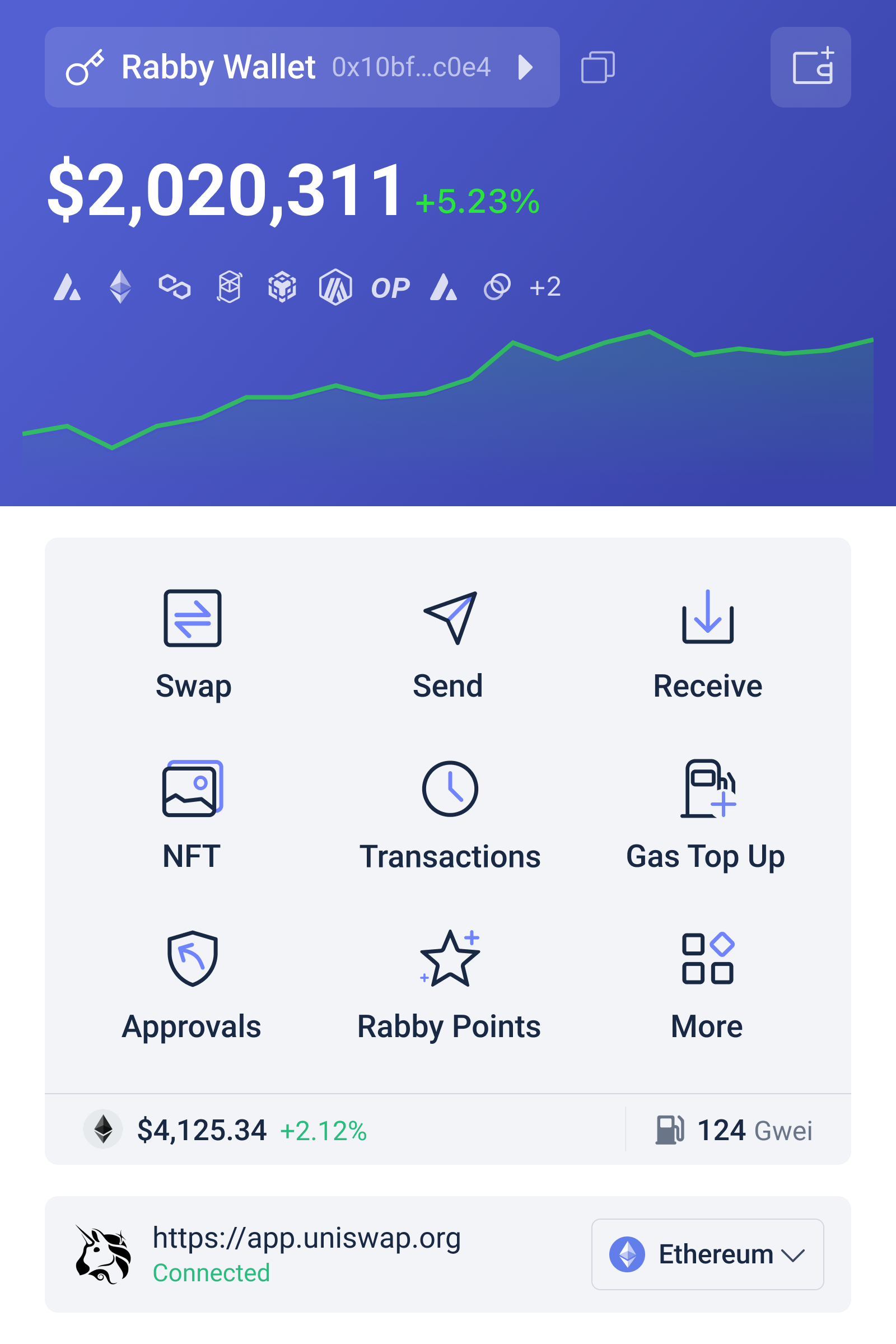
For a practical next step, test wallet simulations on small trades, inspect token approvals, and compare outcomes between public and private submission options. A wallet that integrates simulation, MEV-mitigation options, and portfolio tracking in a readable interface reduces cognitive overhead and helps you make consistent trade decisions. If you want a compact way to try these features, consider a wallet that surfaces simulation results and approval scopes prominently before signing: https://rabby-wallet.at/
FAQ
Q: If I always use simulation, can I stop worrying about MEV?
A: No. Simulation helps you understand likely contract outcomes given current state, but it cannot prevent others from reordering or inserting transactions after you sign. Use simulation to catch logical errors and approvals, and combine it with submission strategies (private relays or builders) if MEV is a material risk for your trade size or strategy.
Q: Are private relays a silver bullet against front-running?
A: They reduce exposure but are not a silver bullet. Private relays require trust in the relay and depend on the broader ecosystem’s incentives. They shift the attack surface — from mempool bots to the relay itself — and can introduce centralization concerns. Use them as one tool, not the only defense.
Q: How should U.S. users balance privacy and portfolio tracking for tax or compliance reasons?
A: Prefer read-only tracking that doesn’t leak keys, use local exports for tax records, and select trackers with explicit privacy policies. Be aware that increased visibility (convenient tracking) can make on-chain activity easier to audit; design your workflow accordingly and consult a tax professional for reporting obligations.
Q: What is the single most effective step a DeFi user can take today?
A: Always run a pre-execution simulation and review approval scopes before signing. That one habit prevents a large share of common mistakes — from infinite approvals to unintended contract interactions — and improves decision-making even if you later accept some MEV risk.